
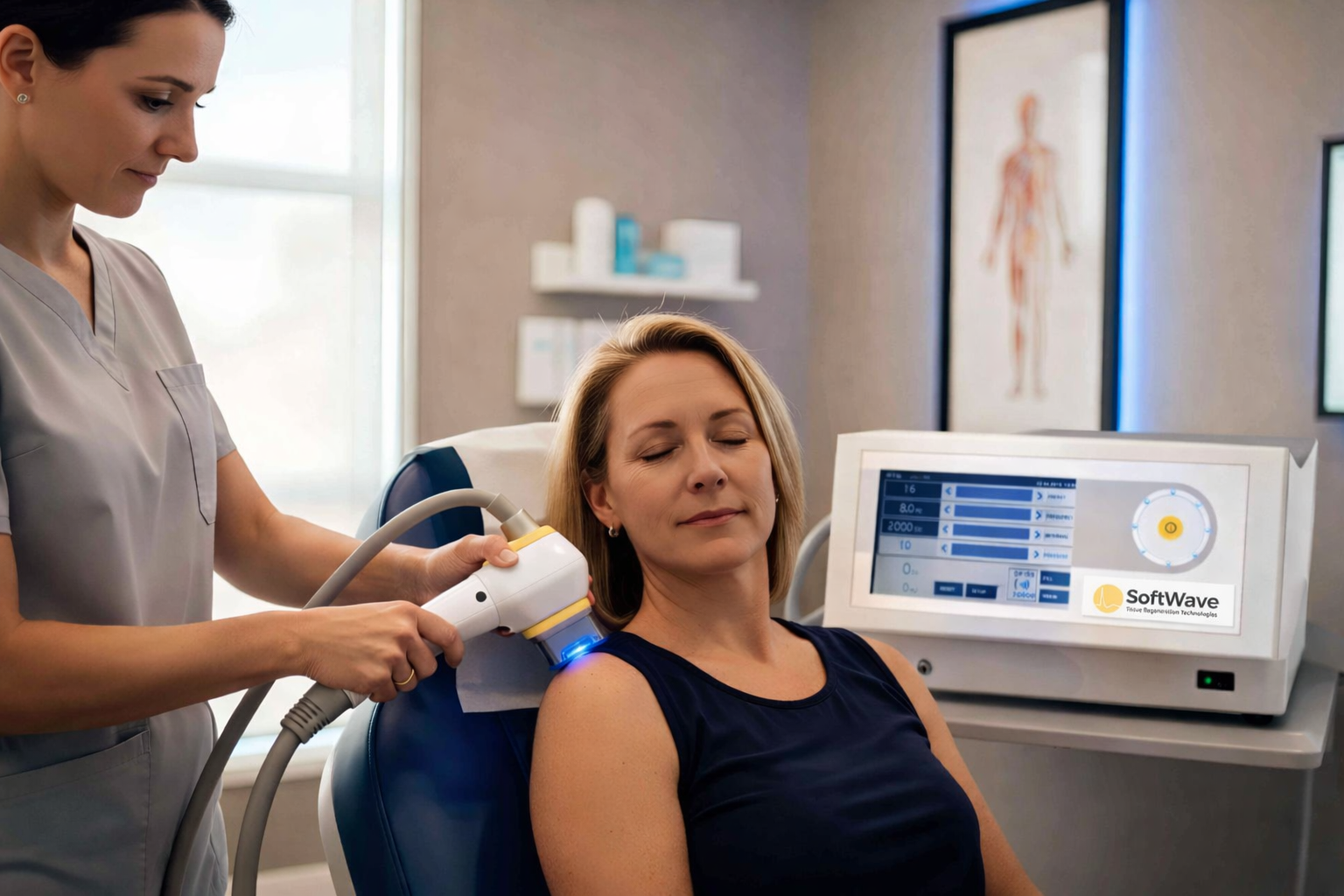
Millions of patients living with chronic and acute musculoskeletal pain are seeking effective alternatives to traditional treatments. One therapy gaining attention for its ability to reduce pain and improve function without drugs or surgery is SoftWave therapy, a form of focused shockwave treatment that’s expanding rapidly in clinical use.
What Is SoftWave Therapy?
SoftWave therapy—also called Extracorporeal Pulse Activation Technology (EPAT)—uses high-energy acoustic waves delivered through the skin to stimulate healing at a cellular level. Unlike surgical approaches, SoftWave is non-invasive, painless for most patients, and typically performed in an outpatient setting with minimal downtime.
Originally developed for breaking up kidney stones, this technology has been adapted to treat a variety of musculoskeletal conditions, including tendon injuries, joint pain, and chronic inflammation.
How It Works: Science Meets Pain Relief
SoftWave therapy works by delivering acoustic pressure waves deep into injured tissue. These waves:
- Increase blood flow to the treated area
- Stimulate the formation of new blood vessels (neovascularization)
- Boost cellular metabolism and tissue regeneration
- Reduce chronic inflammation
By enhancing the body’s own healing response, SoftWave can help reduce pain and improve mobility without relying on medications or injections.
Evidence and Clinical Benefits
A growing body of research supports the use of shockwave therapies like SoftWave for a range of painful conditions. Some commonly treated concerns include:
- Plantar fasciitis
- Tendinopathies (e.g., Achilles, rotator cuff, tennis elbow)
- Chronic joint pain
- Trigger points and myofascial pain
Clinical studies have shown significant pain reduction and improved function in patients treated with shockwave therapy—often lasting months after a short course of treatment.
Advantages Over Traditional Options
SoftWave therapy offers several benefits that make it attractive for patients and providers alike:
✔ Non-invasive: No incision or anesthesia
✔ Minimal side effects: Occasional mild redness or soreness
✔ No drugs needed: Ideal for patients avoiding medication
✔ Quick treatments: Sessions are usually under 20 minutes
✔ Fast recovery: Most patients return to normal activities right away
These strengths make SoftWave particularly appealing for individuals seeking safe, effective pain relief without the risks associated with long-term medication use or surgery.
What Patients Can Expect
Most therapy courses consist of 3–6 sessions, spaced over a few weeks. Many patients report noticeable improvements after just one or two treatments, with continued progress as the body’s healing response develops.
While results vary depending on the condition and individual factors, many patients experience:
- Reduced pain intensity
- Increased range of motion
- Better functional performance
- Enhanced quality of life
A Complement to Comprehensive Pain Care
SoftWave therapy is best used as part of a multimodal pain management plan that may also include physical therapy, exercise, ergonomic education, and lifestyle optimization. It’s not a one-size-fits-all solution, but for many, it offers a powerful, low-risk option that supports healing rather than just masking symptoms.
Takeaway
As the landscape of pain management continues to evolve, SoftWave therapy stands out as a promising non-invasive treatment that harnesses the body’s natural healing mechanisms. Whether you’re struggling with persistent tendon pain or chronic inflammation, SoftWave may be a valuable part of your path to recovery.
If you’re interested in learning whether SoftWave therapy could benefit your pain condition, our team is here to help guide you through your options and create a personalized plan tailored to your needs.